
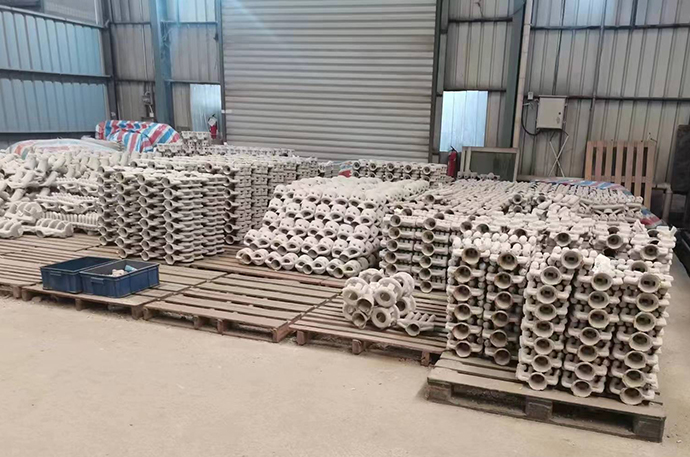
Precision casting
precision castingAlso known as investment castingorlost wax casting, it is a manufacturing process that uses wax molds to shape disposable ceramic shell molds. The manufacturing process is as follows:
- Wax mold making
- Group tree
- Staining and Sanding
- Wax removal
- Burned into
- Casting
- Shell removal, sandblasting, cutting
- Heat treatment
- Processing and inspection
precision castingMaterial
The most common metals can be used, including aluminum, bronze, nickel, carbon steel, and stainless steel.
The parts investment castingmanufactured include turbine blades, medical equipment, firearm components,
Wheels, jewelry, golf ball heads, and many other machine components with complex geometric shapes.
precision castingProcess
Mould engineering and production
Precisioninvestment casting begins with the design and production of casting molds (also known as wax molds). These molds are self-developed and used as the “template” for the final cast. Using a casting mold, wax molds can be sprayed with very precise and highly detailed contours. These wax models are glued together onto a so-called “wax tree,” which is mounted on a casting funnel. Later in the process, steel is poured into the funnel. Depending on the size of the series, the mold is installed on a manual or automatic press.
Ceramics
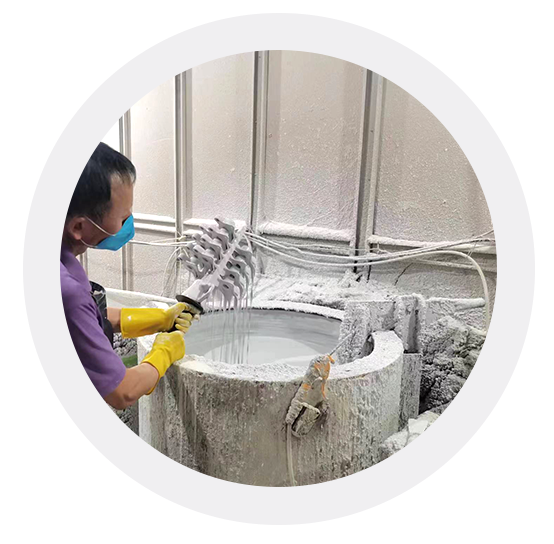
After the wax models were glued together, they were encased in a ceramic shell that was made by repeatedly immersing them in mud (up to 7 or 9 times) and sprinkling ceramic sand over them. The ceramic layer was then cured in a drying chamber and exposed to air. After each layer formed and dried, steam (120°C) was used in a high-pressure chamber to melt the wax from the ceramic tree. This is why it is called “lost wax casting.” The melted wax can be regenerated and reused. Then the ceramic tree is baked at a high temperature (1100°C) and through a solidification process reaches its final strength. During this process, the remaining wax is burned off.
The casting process
The required steel alloys are melted in a large furnace to reach the casting temperature. At the same time, the ceramics are heated in a drying oven to prevent thermal shock during the casting process. After being heated, they are removed from the oven by a mechanical arm and poured into the steel using counter-gravity. After casting, they must be cooled on a cooling conveyor (using nitrogen). Then they are crushed with a fully automatic hammer to break the shell and remove the wood from the ceramic shell. This removes most of the ceramic.
Precision machining and processing
The remaining ceramic is processed in the finishing department by removing it with steel, shotblasting and/or water jetting. The remaining steel is classified according to its alloy and may be melted again during the next casting. Finally, the inner rim is polished off and, if necessary, machined, calibrated or heat treated. The final inspection is completed.