
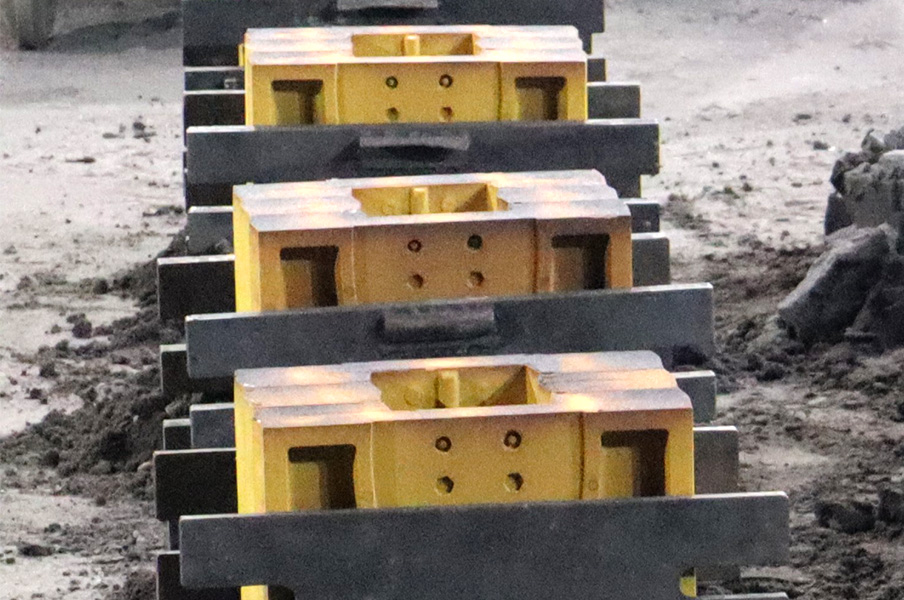
Cast resin shell film
Resin shell molds are precision sand casting molds that provide finer surface finish and dimensional accuracy for the mold core and casting. They can be used for a wide variety of alloys and are less expensive than investment castingcost-effective investment casting. If zircon sand is used instead of silica sand, the cast parts can be made even more resistant to fire and more precise. The manufacturing process is as follows:
- Iron mold casting and machining
- Iron modules are installed into the shell mold core machine
- Preheating the shell mold sand machine
- Blow molding shells and cores
- Shell mold assembly
- Molding
resin shell moldingApplicable materials
Common casting materials include:
- Cast iron
- Carbon steel
- Alloy steel
- Stainless steel alloy
- Copper alloy
- Other metal alloys
This process is typically suitable for medium-sized to small parts that require higher dimensional accuracy, such as:
- Gearbox housing
- Engine head
- Hook
- Lever arm
- Precision mechanical parts of all kinds
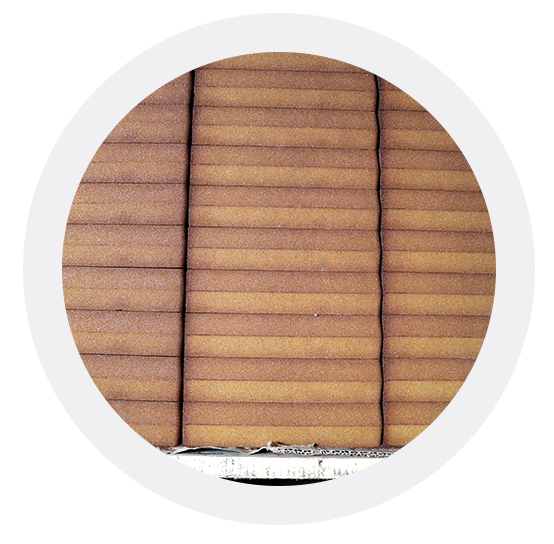
resin shell moldingProcess
Metal mold preparation
First, metal molds are made based on the shape, size, and product requirements of the parts.
The mold cavity of the metal mold corresponds to the final molded part’s shape; it serves as the foundation for subsequent production of the resin shell mold and sand core, ensuring that the size and appearance of the molded part meet the design requirements.
Shell mold manufacturing
Heat the metal mold to the appropriate temperature, then allow the casting sand and mold surface, which are pre-coated with a thermosetting resin, to come into contact.
Depending on the temperature of the metal mold, the resin sand will heat up and solidify on the mold surface, gradually forming a shell mold with a certain thickness and strength.
By controlling the mold temperature, heating time, and shell mold thickness, it is possible to improve the dimensional accuracy and surface quality of the castings.
Shell mold heating and curing
After the preliminary molding is completed, the shell mold will undergo further heating and baking to fully solidify the resin, enhancing the structural strength and heat resistance of the mold.
The actual curing temperature and time will be adjusted according to the resin type, the casting size, and the process conditions to ensure that the shell mold can withstand the high-temperature molten metal during subsequent casting.
Molding work
The solidified shell mold and sand core will be assembled to form a complete casting mold cavity.
After the mold assembly is completed, the molten metal is injected into the shell model cavity, ensuring that the metal liquid fills the product shape completely.
Once the base metal has cooled down and solidified, the required casting parts are formed.
Stripping and post-processing
After the base metal has completely cooled and solidified, the shell mold is broken using a vibration device or other mechanical method to separate the casting from the shell mold.
After removing the casting, follow-up cleaning and processing is carried out according to product requirements, such as:
Remove residual sand mold and shell mold materials
Remove the pouring spout and the opening for pouring
Surface grinding and finishing
Heat treatment
Machining
Surface treatment
Size and quality inspection
After necessary post-processing and quality confirmation, the castings are made to achieve the final required dimensions, surface quality, and mechanical properties.